

Beneath layers of moss-covered red brick walls, Dong Hoi Citadel stands as a silent witness to nearly 400 years of turbulent history. Once a formidable defensive stronghold, it has borne witness to fierce battles, from the Trinh-Nguyen civil wars to years of steadfast resistance.
These towering walls are more than just remnants of war; they reflect the unyielding spirit of the people of Quang Binh. Exploring the ancient citadel is like stepping back in time — a journey through history that allows you to feel the enduring beauty of patriotism and the generations that shaped it.
Where is Dong Hoi Citadel located?
Dong Hoi Citadel is located in the heart of Dong Hoi ward, Quang Tri Province. It originated from the Dong Hai military post, which was part of the Luy Thay defensive system (also known as Luy Dao Duy Tu or Luy Tran Ninh). This strategic fortification was once referred to as the "Great Wall of the South."
Built on a critical section of the north-to-south route through Vietnam, the citadel served as a vital stronghold — the "throat" of the southern region (Đàng Trong) — during the Trinh-Nguyen civil war.
Located approximately 1,500 meters from the Nhat Le estuary, the citadel once served as both a strategic defense line and an important military supply point. Thanks to this special location, it witnessed many key historical events and played a crucial role in helping the Nguyen Lords fend off numerous southern invasions from the North during the Trinh-Nguyen conflict.
Today, although only part of the original structure remains, Dong Hoi Citadel is still a notable historical site. It is conveniently located near other attractions such as Quang Binh Gate (right at the southern entrance of the citadel), Nhat Le Beach (2 km away), and Dong Hoi Market (500 m away).
Admission to Dong Hoi Citadel is completely free for both locals and tourists. Visitors can easily reach the site from Dong Hoi Airport (7 km), Dong Hoi Railway Station (3.6 km), or Dong Hoi Bus Station (1.6 km) by various means of transportation, such as taxis, motorbike rentals, and bicycles.
The history and architecture of Dong Hoi Citadel
Dong Hoi Citadel, also known as Quang Binh Citadel, originated from the Luy Thay defensive system (also called Luy Tran Ninh), which was proposed by Dao Duy Tu in 1630, during the reign of Lord Nguyen Phuc Nguyen. It was built to protect the southern region (Đàng Trong) from the northern ambitions of the Trinh Lords (Đàng Ngoài).
For over 50 years, the Trinh Lords launched multiple southern campaigns, but they were repeatedly defeated at the solid defensive line near the Gianh River. From then on, the Gianh River became a territorial boundary, dividing the country’s landscape into two regions for nearly 150 years.
It wasn't until 1774, when the southern region (Đàng Trong) weakened under the powerful minister Truong Phuc Loan, that the Trinh army managed to cross Quang Binh Gate and capture Phu Xuan (modern-day Hue). Later, in 1786, General Nguyen Hue of the Tay Son army defeated the Trinh Lords, took control of the region, and reinforced its defensive system.
By 1811, during the reign of Emperor Gia Long, the area was restored and became the administrative center of Quang Binh Province, officially named Quang Binh Citadel.
In 1824, Emperor Minh Mang ordered the citadel to be rebuilt with bricks and stones in the Vauban architectural style, on the foundation of the former Quang Binh Citadel. The Vauban style was a popular form of military architecture in Western countries at the time. The Citadel of Gia Dinh (Saigon) was the first fortress in Vietnam constructed in this style.
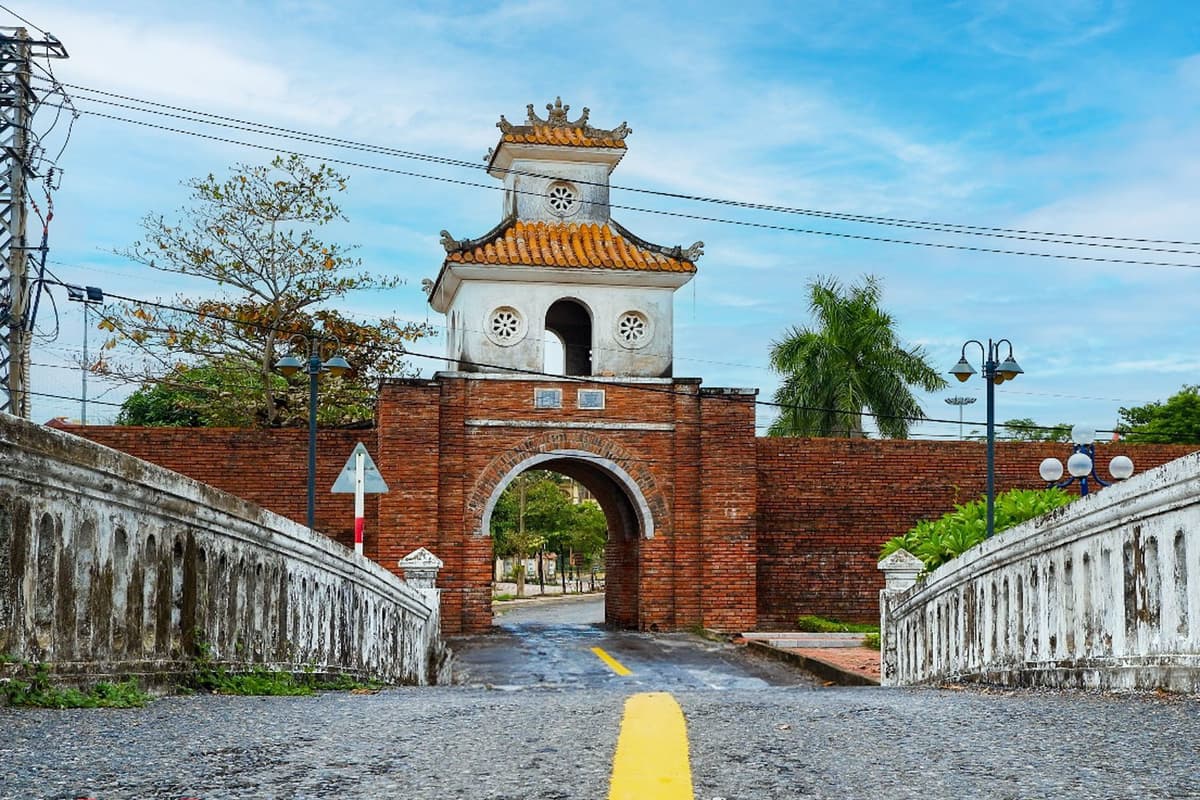
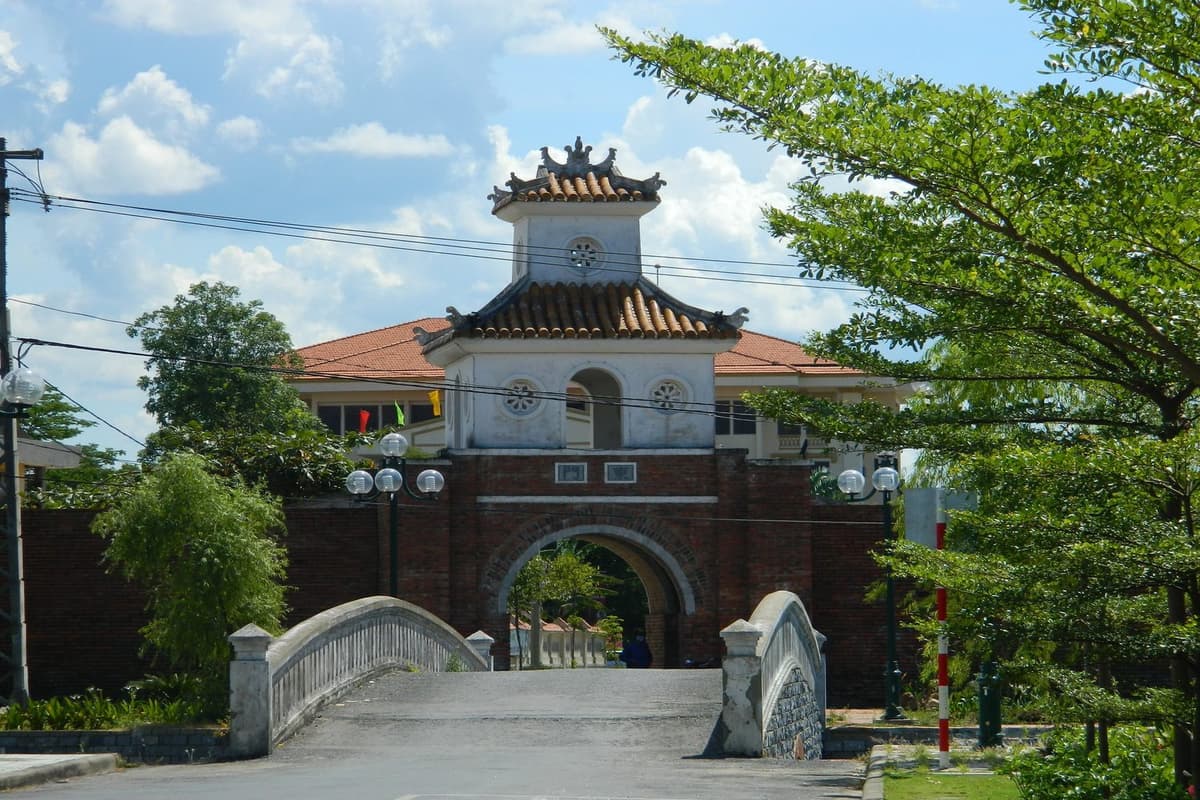
The perimeter of the citadel is about 1,860m long. The wall is about 4m high, the citadel face is 1m35 wide, and the foundation is 2m thick. The citadel had only three main gates: the North Gate, East Gate, and South Gate. Among them, the South Gate faced Quang Binh Gate and played a key role in the defensive system. Notably, the South and North Gates were intentionally offset in direction to prevent enemies from seeing directly into the citadel’s interior layout.
Each gate was topped with an eight-roofed watchtower, and the gateways led outside via arched brick bridges. Beyond the citadel walls, at a distance of 5 to 6 meters, there was a moat approximately 28 meters wide, adding another layer of protection.
In 1842, during his royal inspection tour to Dong Hai, Emperor Thieu Tri ordered the Minister of Public Works, local troops, and citizens to repair and reinforce the citadel and its gates to strengthen the structure’s durability.
Quang Binh Citadel under French Colonial rule
In 1885, when the French colonial forces launched attacks on Central Vietnam, Quang Binh Citadel once again became a defensive stronghold for the Nguyen army. However, after two fierce assaults, the citadel fell into enemy hands on July 19, 1885.
During the Can Vuong resistance movement, local troops and civilians in Quang Binh, led by Nguyen Pham Tuan, launched three surprise attacks in 1886, inflicting heavy damage on the French forces.
Although much of the structure was destroyed during the French colonial period, the citadel remained a symbolic rallying point for patriots willing to sacrifice for their homeland, contributing to the nation’s long struggle for independence.
Dong Hoi Citadel During the Vietnam War
During the resistance war against the United States, Dong Hoi Citadel became one of the primary targets of intense U.S. air bombardments aimed at cutting off supply lines from the north to southern Vietnam. When the U.S. began its destructive campaign, the military and people of Dong Hoi bravely fought back, shooting down an AD-6 aircraft right within the citadel grounds.
Throughout the years of escalating warfare, tens of thousands of tons of bombs were dropped on Dong Hoi. They devastated villages, roads, homes, and flattened many important structures—including all three gates of the ancient citadel, its arched brick bridge, and large sections of the defensive wall.
Yet amid the ruins, the people of Dong Hoi stood firm, courageously holding their ground, fighting, producing goods, and supporting the southern front. Heroes such as Mother Suot, the young boy from Bao Ninh, the elder militia of Duc Ninh, and countless others embodied the indomitable spirit of the Vietnamese people. Dong Hoi Citadel has become a symbol of revolutionary heroism, etched into the nation's history.
The Cultural and Tourism Value of Dong Hoi Citadel in the Modern Era
After enduring centuries of historical upheavals, Dong Hoi Citadel stands not only as a symbol of a glorious past but also as an ideal destination for travelers seeking to explore the history, architecture, and contemporary life of Quang Binh.
The preservation of Dong Hoi's cultural heritage has received strong attention from both local authorities and residents. The site was officially recognized as a National Historical and Cultural Monument on January 21, 1992, and underwent restoration in 2005 with a total investment of approximately 31 billion VND. The restoration included red brick ramparts, green landscaping, lighting systems, and a surrounding canal, creating a space that is both solemn and harmoniously integrated with nature.
In 2020, the monument of President Ho Chi Minh and the people of Quang Binh was inaugurated within the citadel grounds, becoming a prominent highlight of the site. The surrounding square is not only a venue for major provincial events but also a vibrant community space that attracts locals and visitors alike. In the evening, the square comes alive with lights and cool breezes from the Nhat Le River, offering a popular place for recreation and relaxation, such as walking, exercising, and kite flying.
Tourist Attractions Near Dong Hoi Citadel
Located right in the heart of the city, Dong Hoi Citadel is close to several well-known landmarks, making it easy for visitors to include them in their Dong Hoi travel itinerary:
- Quang Binh Gate (at the South Gate of the citadel): Once a key defensive gate, this structure features classic Nguyen Dynasty architecture and is considered a historical symbol of Dong Hoi City.
- Mother Suot Monument: A memorial dedicated to Mother Suot, a heroic woman who rowed over 4,000 trips across the Nhat Le River during wartime to transport soldiers.
- Tam Toa Church Bell Tower: The surviving structure of a Catholic church destroyed by American bombs in 1968, serving as a stark reminder of the war’s devastation.
- Quang Binh Museum: Home to a rich collection of artifacts related to the history and culture of Quang Binh, offering deeper insight into the region’s heritage.
- Nhat Le Beach: Located not far from the citadel, this beach is famous for its soft white sand and clear blue waters — a perfect spot for relaxation.

In addition, travelers can extend their journey to explore other attractions in Quang Binh, such as Vung Chua – Yen Island, Ngang Pass, the Memorial House of General Vo Nguyen Giap, or various historical sites in Phong Nha.
Having stood for nearly 400 years, Dong Hoi Citadel remains a steadfast witness to history, bearing the marks of Vietnam’s struggles and glorious victories. It is not only an important architectural landmark but also a symbol of the enduring spirit of generations who fought and sacrificed to defend their homeland.
Each brick, each wall of the citadel holds stories from a heroic past. Exploring this historical site offers more than just insight into the nation's history — it is a powerful reminder of our shared responsibility to preserve and pass on these precious historical values to future generations.